Get with the Program!
It wasn’t long after Coupon Crazy: The Science, the Savings, and the Stories Behind America’s Extreme Obsession was published that I realized how much I hated sitting behind a table, attempting to catch the eye of a hurried passerby. When I confided my dilemma to a well-established author of more than 100 books, he replied he never did book-signings anymore for the same reason, always offering to do a reading or workshop instead.
I’d already been conducting couponing workshops at community colleges as a strategy to establish myself as an expert in couponing and build up my platform, so the idea of doing the same thing in lieu of traditional book-signings appealed to me. I’ve since developed presentations around each of my six subsequent books, including a “Legacy of the Magic Pencil” presentation for a creativity book that won’t be released until next year.
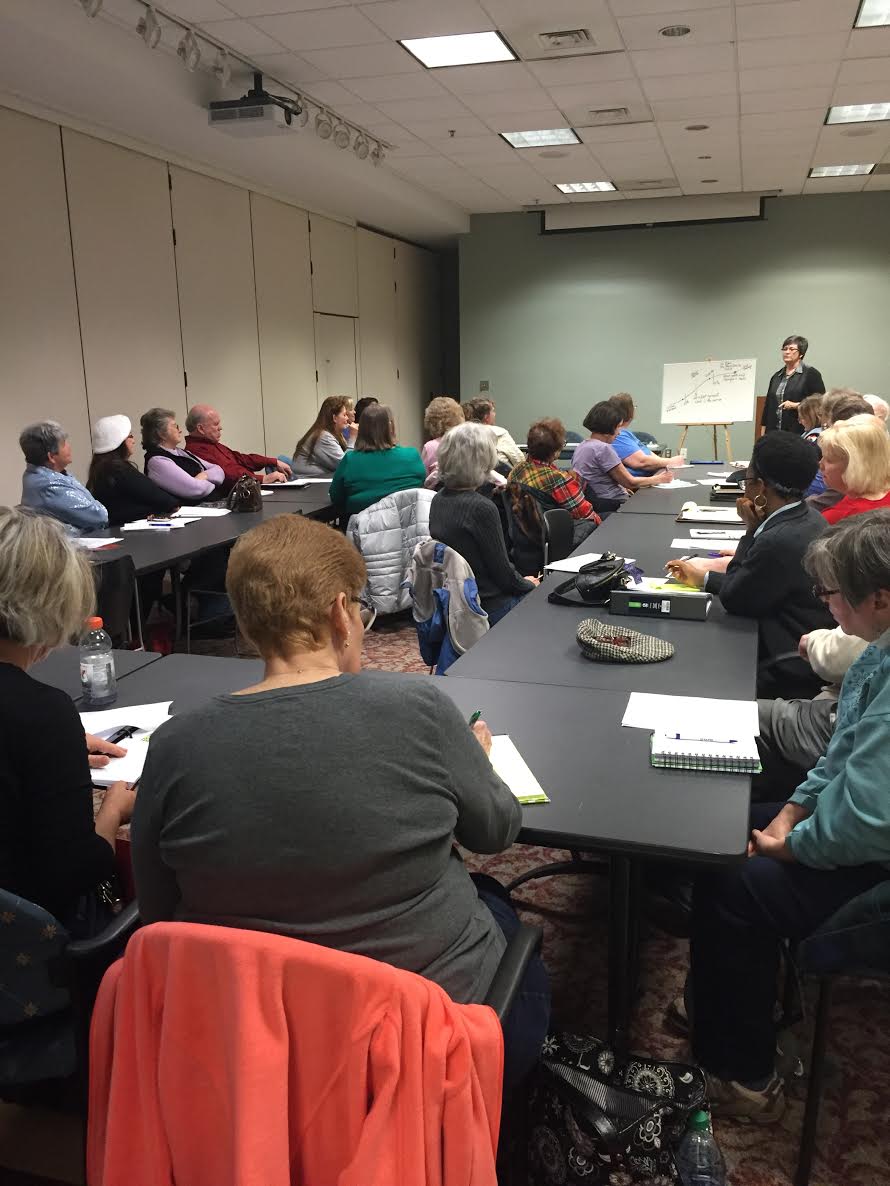
Based on nine years of experience conducting programs, as well as my previous work as a librarian and current position as a program coordinator at a spirituality center, I now encourage all authors to consider developing presentations around the main topic or theme of their writing. Some advice on getting started:
Target your potential audience.
This is easy to do at libraries, with a built-in audience of potential readers. As a librarian, I was a strong supporter of local writers, bringing in several a year. Heather Gudenkauf regaled audiences with the fascinating story of her trajectory to the New York Times bestseller list dating back even before her first book was released. When she first began speaking about writing, she’d bring along a stack of paper revisions that stood as tall as her, an effective means of demonstrating just how much editing goes into the craft and revision of a book. A friend who writes Christian historical fiction developed PowerPoint presentations around each of the historical periods she’s written about. Iowa nonfiction author Linda McCann not only does presentations on each of her carefully researched topics related to Iowa history, she invariably collects stories for her next book from the senior citizens who attend the programs. Her publisher appreciates all the hand selling she does at the more than 150 libraries and senior centers she visits each year. This fall, she’ll expand her speaking venues with a program on POW camps at the spirituality center where I work.
Make sure your presentation is of value to the audience.
Never let your presentation become a sales pitch. Remember the Three E’s: educate, entertain, and engage. If you write westerns, consider wearing a cowboy hat when you do presentations about the Wild West. If you’re a romance writer, dress like your heroine and perform a short monologue skit based on your latest book. Engage the audience by opening with a fun ice-breaker activity. If your program is educational in nature, include audience participation with trivia questions related to the topic, writing exercises, or by breaking into small groups for discussion. Design a presentation that is so entertaining people will flock to the sale table to talk to you and buy your books afterward. Never underestimate word-of-mouth referrals. Librarians and program directors are constantly sharing the names of good speakers.
Set a reasonable fee for your programs.
Because you should charge. The majority of libraries and centers like the one where I’m employed have a budget allotted for speakers and programs. Even the small-town library where I served as director budgeted for programming, paying a yoga instructor $100 for a two-hour workshop or a magician $150 for a one-hour magic show. Why not pay an author for their program? Authors need to value themselves and their time as much as any other occupation. Because trust me, everyone wants a free speaker, but you don’t want to devalue you or your work.
Write up a program proposal.
A short proposal will concisely describe what your program entails, the length, requirements for equipment such as a projector and screen, your author bio with your qualifications, and the cost. You want to make it as easy as possible for the person in charge of programming to say yes. Good speakers with interesting programs are hard to come by, and you want to be one of them.
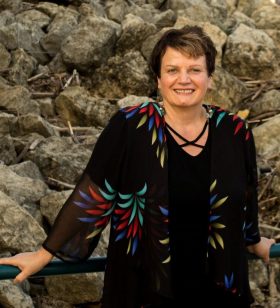
BIO – Mary Potter Kenyon graduated from the University of Northern Iowa and is a certified grief counselor. She works as a program coordinator at the Shalom Spirituality Center in Dubuque, Iowa. She is widely published in magazines, newspapers, and anthologies, including eight Chicken Soup books. Mary is the author of seven books, including the award-winning Refined by Fire: A Journey of Grief and Grace, and a book on creativity to be released by Familius Publishing in 2020. Learn more about Mary at www.marypotterkenyon.com
from https://ift.tt/2mhKWDj FundsforWriters https://ift.tt/2mr1IzC


Comments
Post a Comment